Rotaeno
- 4.3
- Rating
- 100.00K
- Installs
- $2.99
- Price

 Analysis by App-foxy
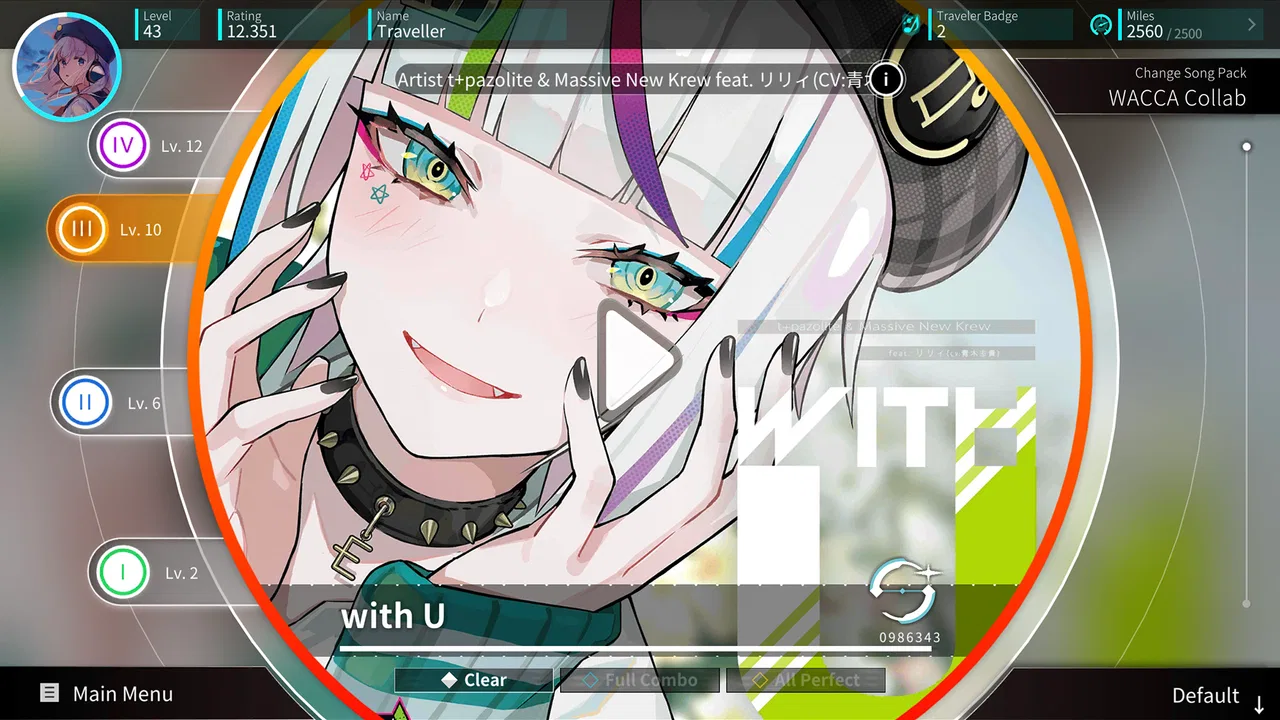
Most rhythm games ask me to tap at the right moment, but Rotaeno makes the phone itself part of the performance. Its central idea is simple to describe and much more interesting to experience: I rotate the device while following musical patterns, turning a familiar timing challenge into something that feels closer to steering through a song. That motion is the reason to try this game, and it also determines whether I will keep playing it after the novelty wears off.
After spending time with it, I see it as a focused music game rather than a casual time-killer. The presentation points toward a cosmic journey, yet the real attraction is the relationship between the music, the touch controls, and the phone’s movement. When everything lines up, a note does not feel like an isolated button press. It feels as if I am guiding a small instrument through a moving track.
The game is made by X.D. Network and sits in the Music category. It costs $2.99 to buy, with optional in-app purchases ranging from $0.99 to $19.99 per item. That combination matters: this is not presented as a free download that depends entirely on spending, but it does ask for an upfront commitment before I can decide whether its unusual control style suits me.
You May Also Like

 AccuWeather: Weather Radar
AccuWeather Review: A Quick, Clear Forecast for Everyday Decisions
For everyday plans, the best forecast is the one you can understand quickly. AccuWeather makes rain timing, radar, and local conditions easy to act on, with a few trade-offs.

 Hill Climb Racing
Why Hill Climb Racing Still Turns Crashes Into One More Run
A tiny car, a bumpy hill and one more upgrade: Hill Climb Racing keeps resurfacing because its simple chaos makes every near-miss feel personal.

 AliExpress - Shopping App
AliExpress Makes Global Shopping Feel Personal, but Shoppers Bear the Risk
AliExpress turns a global marketplace into a pocket-sized discovery engine. Its reach is useful, its shopping loop compelling, and its trade-offs easy to miss.

 Lords Mobile: Kingdom Wars
Lords Mobile Is a Kingdom-Building Routine, Not a Quick Match
A case-by-case verdict on the building, battles, device demands, and social commitments that make Lords Mobile rewarding for some players and exhausting for others.

 PDF Scanner app - TapScanner
TapScanner Makes Paperwork Easier to Capture, Check, and Share
TapScanner makes scanning with a phone feel less like a rescue operation and more like a dependable step in getting work done. Its capture tools are useful, though not flawless.

 Block Blast!
 Shows How Much a Puzzle Game Can Leave Out
A quiet grid game shows why puzzle players increasingly value instant clarity, repeatable skill and low-pressure play—and where the genre still needs to catch up.
More From Our News Desk
View All News


Why rotating the phone changes the rhythm-game experience
The defining capability is motion-based play. Instead of keeping the phone completely still and using only taps, I turn it left or right as the chart asks me to, while also responding to the rhythm. The result is a more physical form of music gaming. My hands are not merely selecting notes; they are constantly adjusting the device’s orientation and timing those adjustments with what I hear.
That distinction gives the game a personality that ordinary tap rhythm games do not have. In a conventional alternative, I can often settle into a fixed posture and focus almost entirely on visual timing. Here, my posture, grip, and movement become part of the challenge. A song can feel manageable when I understand its rhythm but suddenly awkward when the required turns arrive faster than my hands can comfortably follow.
I also found that the rotation mechanic makes mistakes feel different. Missing a tap usually feels like a timing error. Losing control of the phone can feel like a coordination error, because I may have recognized the note correctly but moved too early, too late, or too far. That extra layer gives successful sections more satisfaction, but it also makes the game less immediately accessible than a standard lane-based rhythm title.
The cosmic setting supports this idea without replacing it. I am not playing simply to watch a background or collect a visual effect. The sense of moving through space gives the rotating controls a natural context, so the phone’s movement feels connected to the game rather than added as a gimmick. The strongest moments come when the chart and the music make the turning feel intentional.
For readers who usually play music games with one thumb, this is the key question: do you want your device to remain a screen, or are you comfortable treating it like a controller? If you prefer a stable screen and minimal hand movement, the main feature may feel intrusive. If you enjoy motion controls and want rhythm gameplay that asks more from your hands, it is the feature that makes this release worth noticing.
What the controls demand from the player
Rotation is not a replacement for rhythm. I still need to read the chart, anticipate the beat, and coordinate touch input with movement. That combination creates a useful learning curve. At first, I tend to concentrate on the physical turn and lose track of the musical phrase. With practice, I start reading the sequence earlier and preparing my grip before the difficult passage arrives.
One practical lesson is to avoid holding the phone too tightly. A rigid grip makes quick changes of direction tiring and can exaggerate small corrections. I get better results when the device is secure but my wrists remain relaxed. This is not a flashy advanced technique, but it makes a noticeable difference during longer sessions because the game rewards controlled movement rather than frantic shaking.
Another useful adjustment is to play with the phone at a comfortable angle before beginning a difficult song. If I start with my wrists already bent, the first rotation can feel unnatural and the whole chart becomes harder than it needs to be. A neutral starting position gives me more room to turn in either direction and helps me distinguish a genuine timing mistake from an awkward setup.
The motion also changes how I think about difficulty. A chart with many notes is not automatically the hardest one for me. A slower song can be demanding if its turns arrive in an uncomfortable sequence, while a faster track may become easier once its repeated pattern is familiar. I judge songs by the coordination they require, not only by how busy the screen looks.
How a normal session feels in practice
I usually get the best experience when I begin with a short warm-up rather than jumping straight into the most demanding chart. The first song lets me check my grip, wake up my timing, and remember how much rotation a pattern expects. This is especially helpful when I have switched from another rhythm game, because my hands initially want to use the old habits: keep the device still, watch the lanes, and tap without thinking about orientation.
Once I settle in, the game becomes a conversation between sound and movement. I listen for the beat, watch the upcoming sequence, and make small turns instead of waiting for each instruction to appear directly under my fingers. That forward planning is one of the more rewarding parts of the design. I feel less like I am reacting to isolated prompts and more like I am following the shape of the composition.
Headphones are the better choice when I want to learn a song seriously. They help me separate the musical pulse from the visual activity, which is important because the screen can become busy during demanding sections. I can still play casually without them, but the audio becomes much more useful when I am trying to predict a pattern rather than merely respond to it.
For an everyday example, I would use it during a quiet break at home with enough room to move my hands freely. I would not start it while standing on a crowded train or balancing the phone in one hand between other tasks. The rotation mechanic needs attention and a stable grip, and the game is more enjoyable when I can give the music a few uninterrupted minutes instead of treating it like a background activity.
Short sessions work well because each attempt has a clear purpose. I might replay a track to improve my control through one awkward turn, then stop before fatigue makes my movements sloppy. This is a better routine than repeatedly forcing a difficult song when my wrists are tense. The game rewards concentration, and concentration drops quickly when I am trying to play while distracted.
The strongest use case: focused play with room to move
The ideal setting is a seated session at home, with the device held in both hands and enough space for natural wrist movement. That environment lets the central mechanic show its strengths. I can pay attention to the music, keep my grip consistent, and restart a chart without worrying about bumping into something or dropping the phone.
This makes the game a good fit for players who already enjoy rhythm titles but want a fresh physical challenge. Someone who has become comfortable with tap-only games may appreciate having to relearn familiar instincts. The rotation system gives practice a clear purpose: I am not simply trying to tap faster, but trying to make my movement match the musical structure.
It is also suitable for people who like replaying songs to refine technique. The first successful clear is not necessarily the end of the experience. I can return to a track after learning where the turns feel uncomfortable, then work on making those transitions smoother. That process is especially satisfying when I notice that I am no longer staring at every prompt in panic.
However, I would not recommend using it as a passive way to fill tiny gaps in the day. The game’s best quality depends on active attention, and the phone movement makes interruptions more disruptive than they are in a simple tap game. If I only have a minute and expect to stop instantly, a more conventional casual music app or a stationary rhythm game may be the more practical choice.
The paid entry also shapes the decision. At $2.99, the initial cost is modest, but it still means I should understand the control concept before buying. The additional purchase range may appeal to players who want optional content, yet anyone looking for a completely cost-free experience should consider that the game combines a purchase price with optional items.
Where the design creates friction
The same rotation mechanic that gives the game its identity can make it uncomfortable. Repeated turning may tire my wrists, especially if I grip the phone too firmly or play for too long without a break. This is not a flaw that can be solved by changing my tapping speed; it is a physical trade-off built into the game’s main idea.
Screen size and device handling can affect comfort as well. A phone that feels easy to rotate for a few minutes may become awkward during a longer session. I would avoid playing with anything loose around the device and would be cautious about using it in a place where a sudden turn could send the phone out of my hands. The game asks for movement, so basic handling discipline matters more here than in a stationary rhythm title.
There is also a mental adjustment period. The first few attempts can feel less musical than I expect because I am busy translating the controls. Instead of hearing a phrase and naturally responding, I may be thinking, “turn now, tap next, correct the angle.” That is normal for this design, but it means the game may not deliver instant comfort to someone who wants a relaxed soundtrack with occasional taps.
Compared with a standard rhythm game, this one gives me more expressive control but less convenience. A tap game is easier to play one-handed, easier to pause in a cramped place, and usually simpler to pick up after a long break. Rotaeno offers a stronger sense of physical involvement, but I have to accept the extra setup and the possibility of fatigue.
Compared with a motion-controlled console music game, the appeal here is portability. I can carry the experience on a phone rather than needing a separate controller or a larger play area. The compromise is that the phone is both the display and the motion device, so comfort depends heavily on how naturally I can hold and rotate it.
Who will get the most from it
I think the best audience is made up of players who enjoy learning control systems, not only collecting easy wins. The game is particularly attractive if ordinary tap charts have started to feel predictable and I want something that changes how I read rhythm. Its unusual input method creates a reason to practice beyond simply chasing a higher score.
It can also suit players who enjoy music games as a form of coordination training. I am constantly switching between anticipation, timing, and physical correction. That does not make it an exercise app, but it does make each song feel more active than a typical screen-only challenge. The reward comes from gradually making the motion feel automatic.
I would be more cautious about recommending it to someone with limited hand comfort or anyone who dislikes games that require repeated device movement. Even if the music and visual style appeal to that player, the central control method is not optional flavor. It is the foundation of the experience, so avoiding rotation would mean avoiding what makes the game distinct.
Parents may also appreciate that the content rating is Everyone, but age suitability does not automatically mean every child will find the controls comfortable. Younger players should still have a secure grip and a suitable place to play. The game is rated for a broad audience, yet its physical interaction deserves the same common-sense attention as any activity involving a handheld device.
On the technical side, the current version is 2.26.1 and requires Android 6.0 or later. That makes it approachable for people who are not using the newest phone, although actual comfort will still depend on the device’s size, weight, and handling. I would think about ergonomics as much as operating-system compatibility before deciding.
The game has reached over 100 thousand installs, carries a 4.3 average from around 6.7 thousand ratings, and has 222 written reviews. Those figures suggest a healthy audience for a specialized rhythm game, but they do not remove the personal nature of the decision. A player can enjoy the music and still dislike rotating a phone, while another can find the first attempts awkward and later become attached to the control style.
My recommendation after learning its rhythm
I recommend Rotaeno to anyone who wants a music game built around movement rather than another collection of taps. Its central capability has a real effect on play: it makes me prepare earlier, use my hands more deliberately, and listen to the structure of a song while I play. That is more meaningful than a cosmetic gimmick, because it changes how I approach every chart.
I would buy it with realistic expectations. The opening learning curve may feel strange, longer sessions can become tiring, and the game is not ideal for cramped or distracted play. The optional purchases are another reason to decide how much content I actually want before spending beyond the initial purchase. None of these points cancels the concept, but they are important when comparing it with easier tap-based alternatives.
For me, the deciding test is simple: if the idea of turning the phone in time with music sounds exciting rather than inconvenient, this is a strong candidate. If I want a rhythm game that stays still, works comfortably one-handed, or can be played while multitasking, I would choose something else. Its greatest strength is also its clearest filter: the rotation is not an accessory to the experience; it is the reason the experience feels different.
After getting past the initial coordination barrier, I found the game most rewarding when I treated each song as a movement pattern instead of a test of reflexes alone. That change in mindset makes the cosmic presentation feel earned and gives practice a satisfying direction. I would recommend it to a friend who enjoys focused sessions, wears headphones, and is willing to let a rhythm game move with them.
FAQs for Rotaeno
01What is Rotaeno, and how does its gameplay work?
Rotaeno is a rhythm game for mobile devices that combines traditional note timing with a rotating-screen mechanic. Instead of only tapping notes, you physically turn your phone to match the direction and movement of incoming patterns. The result feels more active than a standard music game, although it may take a little practice to become comfortable with the controls and rapid rotations.
02Is Rotaeno free to download and play?
Rotaeno can generally be downloaded for free, but the available content may include optional purchases or paid song packs. The free version gives players an opportunity to learn the controls and try selected tracks before spending money. Anyone considering the game should check the current store listing, pricing, and included content because song availability and purchase options can change between updates or regions.
03Does Rotaeno require an internet connection?
An internet connection may be needed for the initial download, account-related features, updates, advertisements, or purchasing additional content. After songs and required data have been installed, some gameplay can usually be enjoyed offline, depending on the mode and device. It is best to launch the game online at least once after installation so that all necessary files and licenses can be verified.
04What devices are compatible with Rotaeno?
Rotaeno is designed for modern Android and iOS smartphones, but the rotating controls make device compatibility especially important. A phone with a responsive motion sensor, stable performance, and enough free storage will provide the best experience. Older or lower-end devices may experience reduced performance, while tablets or unusual screen layouts may not feel as comfortable for rotation-based play.
05Is Rotaeno suitable for beginners and casual rhythm-game players?
Rotaeno is approachable for newcomers because its early stages help explain tapping, holding, sliding, and rotating techniques. However, advanced songs become demanding quickly and require accurate timing, coordination, and comfort with turning the device. Casual players can enjoy the music and easier difficulties, while experienced rhythm-game fans will likely appreciate the higher levels and more challenging patterns.
Pros
- Excellent rhythm gameplay built around device rotation and tilting.
- Responsive controls make songs feel engaging and physically interactive.
- Wide selection of tracks across electronic and anime-inspired styles.
- Strong visual presentation with polished effects and animated backgrounds.
- Progression and unlocks give players reasons to return and improve.
Cons
- Rotation controls may feel uncomfortable during extended play sessions.
- Requires enough space to tilt the device safely and accurately.
- Higher difficulty charts can be demanding for newcomers.
- Some content may require additional purchases or in-game progression.
- Performance and tracking can vary across older or less powerful devices.

Rotaeno
Gallery